All About Seasonal Cycles
It's time to get acquainted with the seasonal cycles and understand how they affect your farm in Farming Simulator 22.
Four Seasons
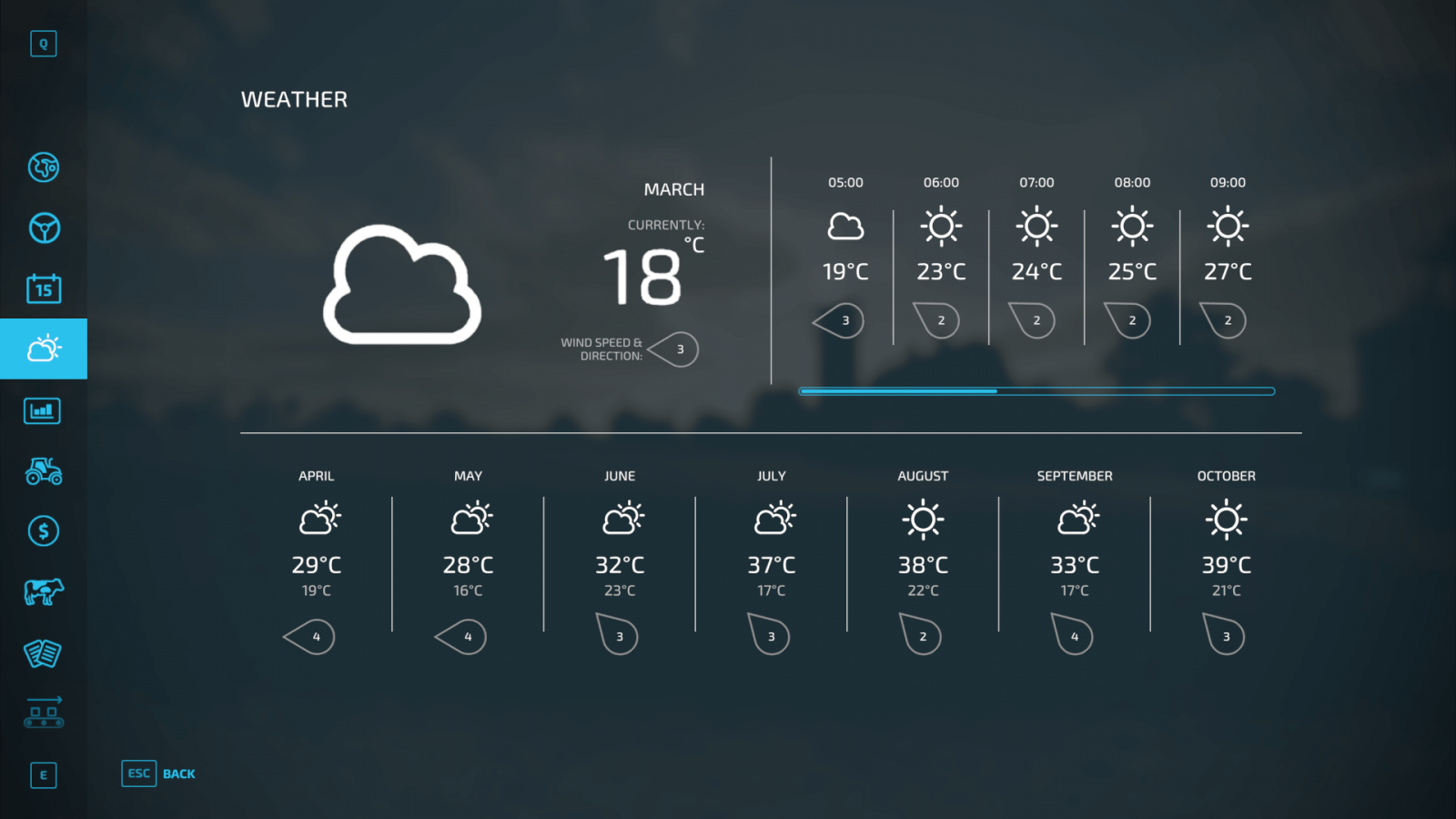
The seasons differ not only visually but also in gameplay. The game starts in August, following this cycle: summer, autumn, winter, spring. Let's take a look at each of these seasons.
- Spring. This season is ideal for sowing the majority of available crops in Farming Simulator 22.
- Summer. This season is also suitable for sowing (since the cycle for most crops starts in March and ends in June). But summer brings other tasks as well, as it’s the perfect time to manage pastures and prepare for winter (for example, by gathering feed for your animals).
- Autumn. If you didn’t start preparing for winter during summer, you should do so immediately in autumn. However, this season is busy enough on its own, as from September to November you need to focus on harvesting.
- Winter. The most challenging period in Farming Simulator 22, since growing crops is impossible during winter (except in greenhouses). You will need to clear snow from roads, feed your animals, manage production chains, and if you have greenhouses, you can grow other crops.
Seasonal Settings
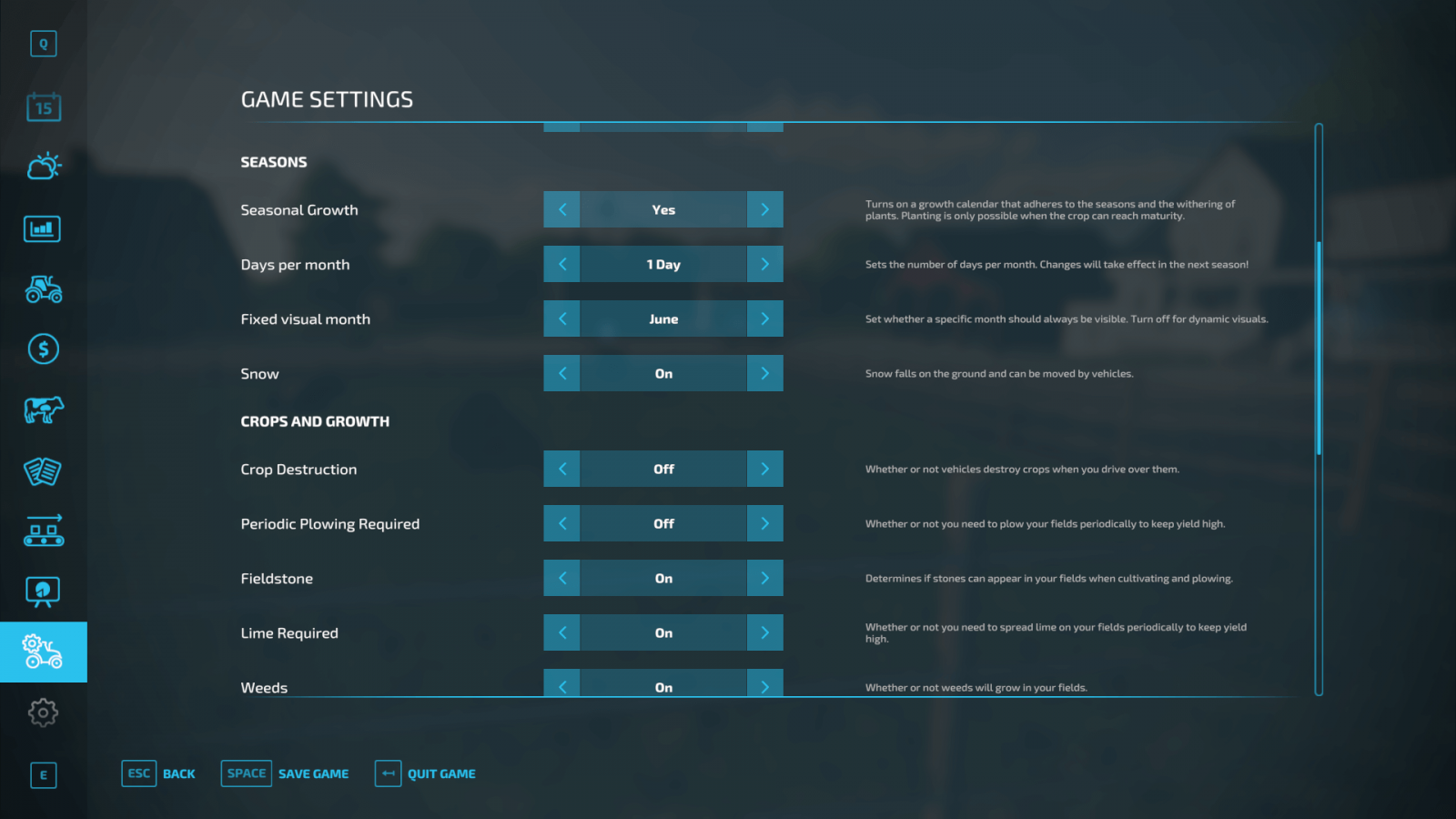
In FS22, you can change seasonal settings at any time, so you can enable or disable the gameplay aspect of seasonal cycles and work calmly without worrying that winter is approaching. However, some settings take effect only after the current season changes.
- Seasonal Growth. An important setting that determines whether you need to grow your crops according to a special calendar included in the game. This option adds a lot of realism to your gameplay, but if you haven’t played the Farming Simulator series before, it’s better to keep this setting off for now. Playing with this setting enabled makes the game more realistic but also much more challenging.
- If you think the seasons change too quickly, you can increase the number of days in a month to 28. That means one year will last 336 days. By default, 1 day = 1 month in the game. So, 1 year in FS22 equals 12 days. But this can be easily changed. Experiment and find a comfortable value for yourself.
- You can use the Fixed Visual Month setting to keep the visual aspect of the seasons unchanged. So, if you want eternal summer with no snow or other visual seasonal changes, you can do that.
- The Snow option lets you decide whether snow will fall and remain on the ground. This setting controls the gameplay aspect of snow; snowflakes will appear regardless, but if you enable Snow mode, snow will accumulate on the ground and will need to be cleared to free paths.
These are the interesting seasonal settings in Farming Simulator 22.
Harvest Calendar
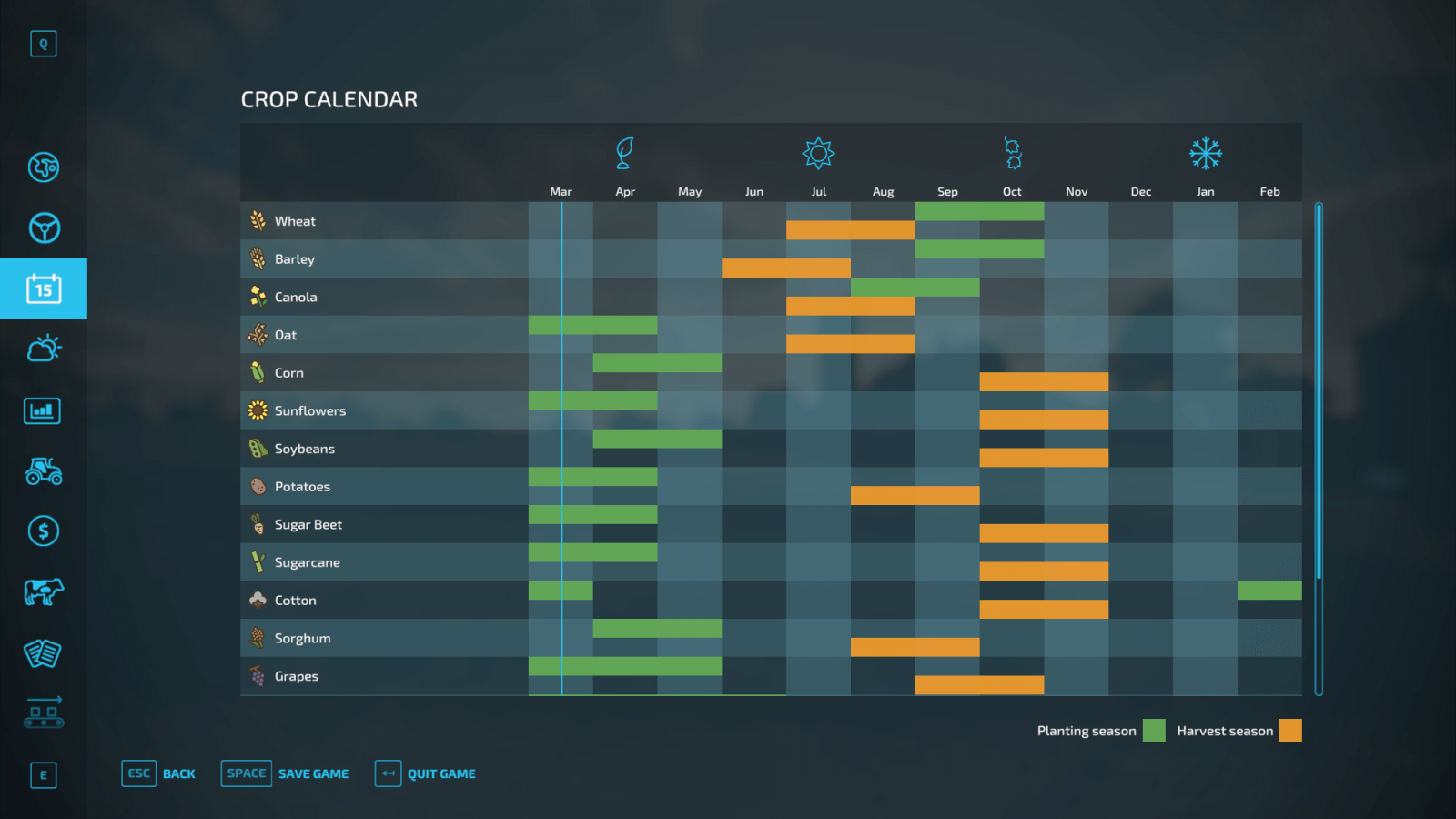
If you decide to play with seasonal cycles enabled, you will definitely need the in-game seasonal calendar. Each type of crop has specific requirements that must be followed to succeed. The seasonal calendar helps you determine which crops to grow in which seasons and when to harvest them.
Take wheat as an example. It’s best to sow wheat in September or October. This period is marked in green on the calendar. After that, you need to wait 10 months (again, according to the calendar). Therefore, the harvest should be gathered in July or August. If you ignore these requirements, you won’t get any yield.
But don’t forget, seasonal growth can be easily turned off in the settings!
Write the reason for your dislike:
If you do not explain the reason, but write an unintelligible text, you will be deprived of the opportunity to evaluate the mods, news and articles.
CancelRead more
Comments
Rules for writing comments. For non-compliance - ban!
Forbidden:- Use of profanity in messages
- Communication is not on the topic of the material
- Any insults of other users, including the author of the material
- Writing messages in whole or in part in CAPITAL letters (Caps Lock)
- Expressing your opinion without supporting it with arguments
- The use of links to third-party sites, or the use of images/videos/other content containing the aforementioned links

 Spintires: MudRunner
 SnowRunner
 Euro Truck Simulator 2
 American Truck Simulator
 Farming Simulator 2017
 Farming Simulator 2019
 Farming Simulator 2022
 BeamNG.drive
 City Car Driving
 Farming Simulator 20
 OMSI 2
 Assetto Corsa
 MXB
MXB